
Managing Information Overload as an Early-Career Medical Writer (info overload perspective 3)
How to get the best of information and not let it get the best of you

Written By: Dr Leanne Braganca
Edited By: Catherine Gooch, PhD
The world of science has transformed with the advent of the internet (and now AI). Scientific research previously involved tedious and time-consuming perusal of medical journals and textbooks. Today, this process is now optimized to conveniently access information within minutes. AI can now generate summaries of scientific articles and speed up your work. Besides the information you actively search for, you also passively receive large amounts of information from social media, emails, etc.
The cliché of how ‘too much of a good thing can be bad’ makes itself glaringly present here. The information overload comes at a cost.
Our brains weren’t designed to deal with such a huge influx of information at a time. It can change how our brain processes, filters, and stores information. It can also negatively impact our cognitive abilities, psychological and physical well-being, and decision-making skills.
As medical writers, we are affected at both ends of the spectrum — be it as consumers, or as disseminators of the information.
Learning how to effectively deal with this remains a crucial skill.
Research/Evidence
In a systematic review, Arnold (2023) suggested five levels of causes of information overload. The authors suggested that each of these can also serve as starting points to address the problem.
They include:
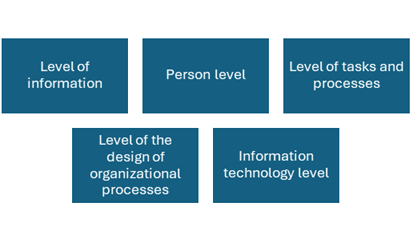
Level of Information
As a medical writer researching the information, ensure that the information you are engaging with aligns with your needs. Filter out what you do not need and stick to evidence-based resources.
Many journals and professional organizations also create curated lists of high-quality articles, so-called ‘best of’ or ‘editor’s picks.’ Seek out these lists. You can also find review articles relevant to your interests and scour their reference lists for articles on a specific topic.
Decide whether to read them in detail and, if so, how quickly and how deeply.
As a medical writer presenting the information:
Present the information as clearly as possible. It should be possible to intuitively access background information that is not visible at first glance.
Volunteer to peer-review. Be very specific about the topics and types of manuscripts during the peer-review process. This assists both you and the journal by ensuring only high-quality scientific publications by ‘cutting out the clutter.’
Person Level
As a medical writer researching the information:
Set fixed times for research, processing e-mails, working on your projects and networking.
Sequence all your tasks in a personalized manner best suited to you.
Delegate work, not only to colleagues but also, if possible, to digital agents.
Practice mindfulness. Don’t allow overlap of the boundaries between work and life.
As a medical writer presenting the information, adequate training can help you streamline and smoothen your workflow. This would help reduce your points of stress and prevent you from feeling overwhelmed.
This would include:
Training on the use of useful technologies and tools
Media and information literacy
Time management
Training on e-mail communication and ‘netiquette,’ (i.e., topics such as virtual politeness, clear articulation of concerns related to task objectives, etc to systematically address any queries and avoid unnecessary communication)
Knowledge on how to perform comprehensive search strategies
(This article is aimed at strategies to combat information overload in early medical writers. Since the ‘level of tasks and processes’, ‘level of the design of organizational processes’, and ‘information technology levels’ described by Arnold (2023) are applicable to established medical writers employed in corporate firms, it is beyond the scope of this topic. Readers are encouraged to refer to the source article for further reading.)
This is me, as a medical writer, filtering out the unnecessary information to prevent information overload.
Personal Perspective
When I initially started exploring the world of medical writing, the sheer amount of information available online was extremely daunting. I spent a lot of time not knowing where to even begin. Everything seemed urgent and important. It took me a while to find my niche and not feel overwhelmed. Some things that worked for me are listed below.
Closing Tabs
Multiple tabs open on your browser will slow your computer down (and metaphorically slow you down as well). Close any unnecessary windows that are open.
Refer only to the sources that you have strategically singled out after a well-performed search. It will help you feel more in control over what you are doing if you aren’t overwhelmed at the sight of multiple tabs open.
Use Technology
Leverage the very technology that is partly responsible for information overload to help you manage it.
Use a reference management software such as Zotero, Mendeley, etc. as your personal reference library to keep track of and organize references. Many reference managers are free and allow you to store full-text copies of articles.
As a medical writer, it is very important that you learn to use these tools. Familiarity with them will help you with future job prospects as well.
Plan Your Schedule
Set aside time to research (the more you read, the better you will get), to work on projects and build your portfolio, to upskill (a lifelong commitment as a medical writer), to network (form a community and grow together) and very importantly, to relax (you cannot pour from an empty cup).
Gradually, you will figure out the frequency of what each of these should be and what works best for you.
Save Things for Later
Yes, some things can be put off for tomorrow. You can use a task-management software like Notion or a good old MS Word or Google document and add all the courses, certifications and helpful articles that you come across while browsing since you won’t be able to do them all immediately.
You can even create collections of articles on PubMed under the “My Bibliography” section (after logging in) or in Google Scholar under the “My Library” section that you can go back to for future reading.
This will help you re-visit your work at a time when you have the bandwidth for it.
Train Your Algorithm
I’ve noticed that if you engage with posts that align with your interest, the algorithm of sites such as LinkedIn starts sending helpful posts and relevant connections your way. It is important to use LinkedIn mindfully. It doesn’t work like other casual social media applications.
You must network with people who are within the professions and realms that align with where you are/ want to be. If you don’t, you will receive a lot of information that may not necessarily be beneficial to you. Avoid the information overload there as well.
And yes, if you do not have the bandwidth to read a post or apply to a job at that very moment, save it for later. What I do is I scroll casually through the app on my phone whenever I have the time during the day. I save posts that I find relevant and interesting and check these on my laptop at the end of the day.
Unsubscribe
Last but not the least, unsubscribe if the content doesn’t fit your needs. It’s nothing personal. It just might not be the right fit for you at the time. Nothing should be stressing you out on your own phone screen.
Key Takeaways
As a new medical writer, engage in good information behavior yourself. Approach information strategically and systematically. Keep improving your skills and streamline and sequence your workflow.
In particular, take your role as an information provider seriously as well. Disseminate information mindfully based on the requirements and established needs of your target audience. Don’t approach it with a mindset intent on going through distribution lists, tackling ‘targets’ and generating a load for others. Our roles in healthcare will always put the well-being of people ahead of any of these targeted tasks. But, remember to care for your well-being too. Be responsible and ethical. Remember to also cultivate skills that will help you improve your efficiency as a medical writer.
Try the bite-sized lesson to get hands-on practice with finding references to quickly get up to speed on a new topic.
Other Voices on This Topic
Consider reading these additional articles for unique perspectives and advice.
Using task management systems and peer support to stay organized
A guide to curating your regular readings to focus on high-impact sources
References
Maggio LA, Artino AR Jr. Staying up to date and managing information overload. J Grad Med Educ. 2018;10(5):597-598.
Wilson TD. Information overload: implications for healthcare services. Health Informatics Journal. 2001;7(2):112-117.
Arnold M, Goldschmitt M, Rigotti T. Dealing with information overload: a comprehensive review. Front Psychol. 2023;14:1122200.
Leila Shahrzadi, Ali Mansouri, Mousa Alavi, Ahmad Shabani. Causes, consequences, and strategies to deal with information overload: A scoping review. IJIM Data Insights. 2024;4 (2): 100261.
AI Disclaimer
No AI was used in the writing of this article.
Contributions of Blog Creator
Nicole Bowens, PhD, developed the topic and selected one of the references for this article. She created this blog to bring together perspectives from medical writers at all experience levels, with the goal of supporting those who are aspiring or early in their careers.
If you are interested in contributing to the blog as a writer or editor, fill out the Google form application, and you will receive a follow-up email with further instructions.
About the Contributing Author
This article was written by Dr. Leanne Braganca, MDS Periodontology, a passionate dental professional experienced in delivering impactful presentations, including award-winning scientific posters and papers. She has a keen interest in scientific writing and academia and believes that health education bridges the gap between research and public awareness.
Additional Articles from Author
The AI Transition in Medical Writing: A Practical Navigation Guide (AI ethics perspective 3)
A holistic overview of the professional and cognitive risks in incorporating AI into the workflow
Contributor Contact Info
Writer: Dr Leanne Braganca
📧 Email: leanne.braganca@gmail.com
🔗 LinkedIn: https://in.linkedin.com/in/dr leanne-braganca-85b194357
Editor: Catherine Gooch, PhD
📧 Email: cgooch9@gatech.edu
🔗 LinkedIn: https://www.linkedin.com/in/cat-gooch/
In a world overloaded with constant sensory inputs and external distractions, learning how to filter distractions is one of the essential skills every professional should have. This is how a person can maintain balance between work and life.
As a newbie medical writer, this article gave me lots of practical advice to manage information overload (aka. my biggest source of overwhelm right now 🥲). Loved the clever in-text example of redirecting the reader!
Great read, thank you!